By Tim Liao – Zero-Calorie Soda Addict
Lately, I’ve come across countless articles claiming that people who drink so-called “zero sugar” sodas are gaining weight at alarming rates—even though these drinks supposedly contain zero calories. Researchers argue that certain chemicals in these sodas trick our brains into craving more sugar, leading to increased consumption. Well, I’m calling BS on that theory.
Yes, there is a correlation between drinking zero-calorie sodas and weight gain, but it’s not nearly as complicated as these scientists make it out to be. Before I break down my theory, let me give you a little backstory on how this debate personally affects me.
My Experience With Soda and Weight Gain
I used to be an avid Coke drinker—especially the pure cane sugar version from Mexico. (Side note: Coke could revive its entire U.S. business by switching back to cane sugar instead of using high-fructose corn syrup, but that’s another discussion.) However, in 2013, I decided to kick my soda habit due to my type 2 diabetes diagnosis and my commitment to a healthier lifestyle. So from that day on and for nearly a decade I rarely ever drank a soda. Then came September 2023. A good friend treated me to a Club Suite at SoFi Stadium to watch the Los Angeles Chargers take on my favorite team, the Miami Dolphins. The suite had unlimited food, soft drinks, beer, and wine. Since I don’t drink alcohol and was avoiding sugar, my options were limited to water and artificially sweetened sodas—something I had never enjoyed in the past.
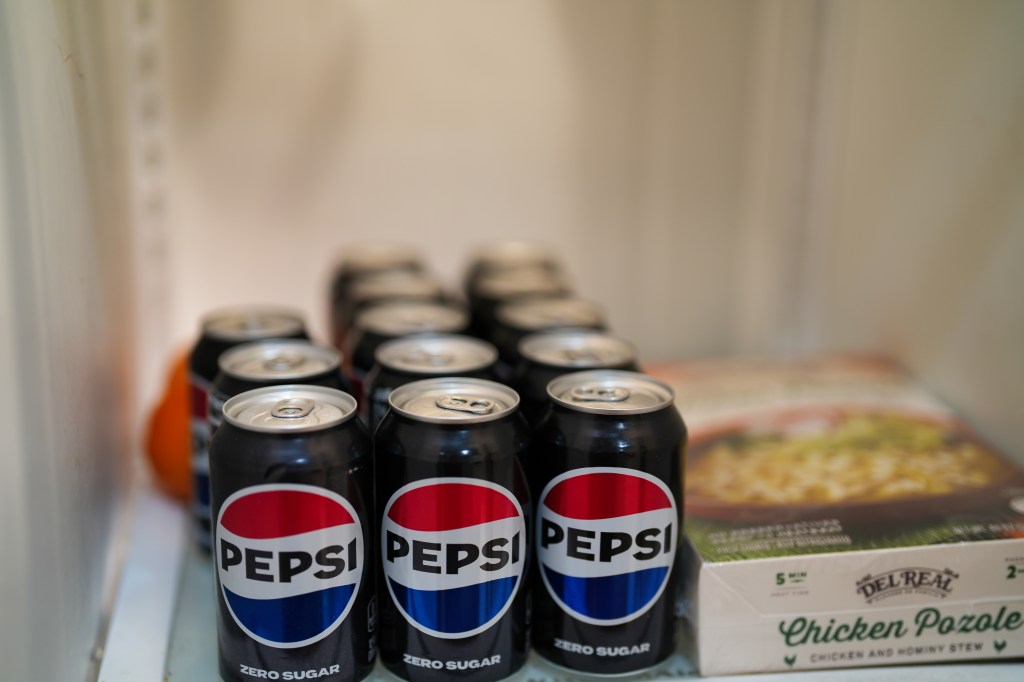
But for some reason, Pepsi Zero Sugar caught my eye that afternoon. I decided to give it a shot.
Fast-forward 14 months to December 2024, when I decided to assess how many cans of Pepsi Zero I had consumed since that first sip at the game. The total shocked me: over 950 cans. But what was even more alarming? The weight I had gained.
Between my August 2023 physical and stepping on the scale in December 2024, I had packed on 13 pounds. That’s a lot of weight for someone my size—especially considering that my main drinks during that period were zero-calorie sodas, black coffee, and water.
The Real Reason Zero-Calorie Soda Leads to Weight Gain
So, why did I gain all that weight? It wasn’t because my brain was confused and caused me to crave more sugar—at least not in the form of sweets. Instead, what I found myself craving—and consuming way more of—were high-carb foods: pizza, hamburgers, tacos, chips, French fries, and more.
But here’s the key: This has nothing to do with some mysterious chemical that scientists claim messes with our brains. It’s much simpler than that.
When I quit soda in 2013, I also broke my addiction to high-carb foods. Back then, my brain had been conditioned to associate the satisfaction of eating carb-heavy meals with the pleasure of washing them down with a Coke. Once I eliminated soda, I didn’t crave those high-carb foods as much because I wasn’t getting the same sensory reward.
But when I reintroduced soda—this time in the form of a zero-calorie, zero-sugar alternative—my brain reconnected the dots. Suddenly, I was getting that familiar satisfaction from drinking soda again, even though it wasn’t the same sugary drink. And what pairs perfectly with soda? High-carb, calorie-dense foods.
That’s why you often see people ordering a double cheeseburger and large fries—but washing it down with a Diet Coke. They weren’t lied to; the soda really does have zero calories. But the problem isn’t the drink itself—it’s what the drink triggers in our brains. By consuming diet sodas, we’re rekindling the addiction to the very foods that cause weight gain.
So next time you reach for a Diet Coke, Pepsi Zero, or any other zero-calorie soda, think about what you’re pairing it with. The soda itself may not have calories, but if it leads you to crave and consume more high-carb foods, the weight gain will follow. Trust me—I learned the hard way.
 ALMADEN
Leave a comment